Choosing the Right Dumpster Size for Your Move
Getting ready to move and overwhelmed by junk? Learn how to choose the right dumpster size and the safest place to put it on your property.
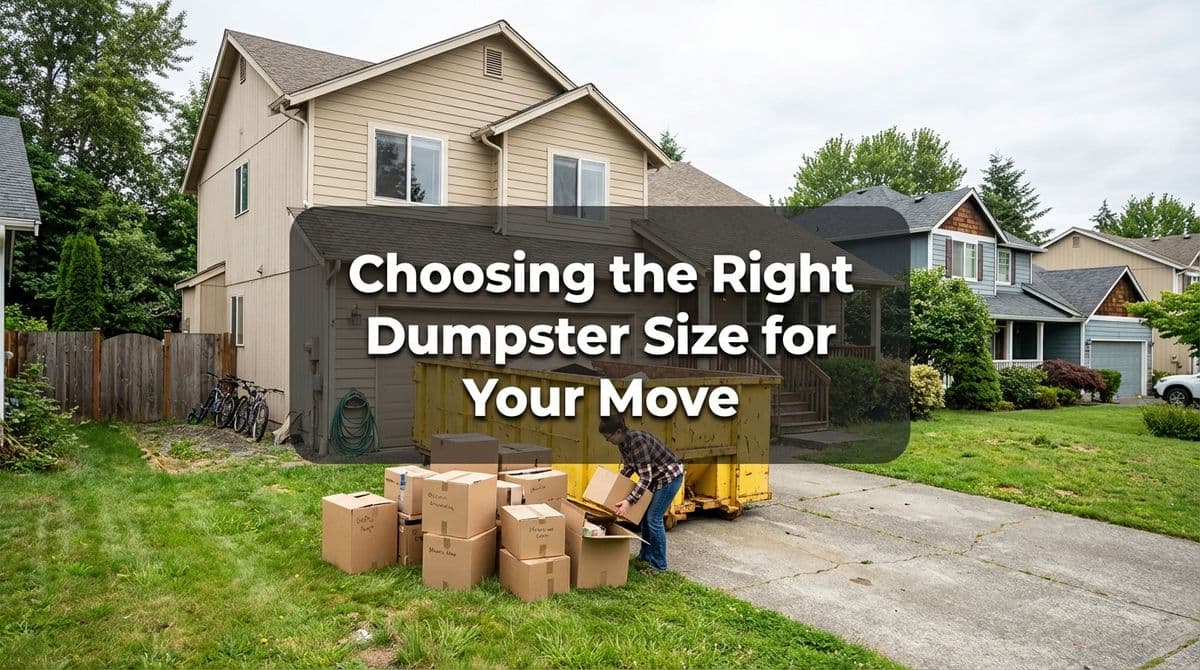
Helping a Customer Pick the Right Dumpster for a Move
We recently got a call from a customer — let's call her Karen — who was getting ready to move and feeling overwhelmed by the clutter. She told us she needed “a small… I hope it’s a small… maybe a medium dumpster” because she had potted plants, two twin box springs, and “assorted junk” that had to go before moving day.
On top of that, Karen wasn’t sure where a dumpster could safely sit on her property. She asked if it could go on the grass and what we’d recommend. If you’ve wondered the same things, you’re not alone — we walk through these questions with customers every week.
Using Karen’s call as an example, we’ll break down how to choose the right dumpster size for a move and how to pick a safe spot for it on your property.
Step 1: Get Clear on What You’re Actually Tossing
When Karen called, she immediately jumped to size: small or medium? Before we talk sizes, we always back up and ask what’s really going in the dumpster. With Karen, it was:
- Several potted plants
- Two twin box springs/mattresses
- Random household “junk” from cleaning out before a move
That might not sound like much, but bulky items like mattresses eat up space quickly. Meanwhile, things like bags of trash or broken small items pack down and don’t need as much room.
When you’re planning a move, walk through your home and quickly list out:
- Big, bulky items (mattresses, box springs, old furniture, shelving, outdoor toys)
- Outdoor items (potted plants, yard debris, broken lawn furniture)
- General junk (boxes from the attic, old decor, worn-out clothing, broken electronics)
Having that rough list helps us guide you to the right size instead of guessing.
Step 2: Understand Common Dumpster Sizes for Moves
On Karen’s call, we walked her through the options we offer most often for residential moves:
- 12-yard dumpster – Our “small” size
- Good for: smaller cleanouts, apartments, light decluttering
- Surprisingly roomy for a few mattresses, plants, and assorted junk
- 20-yard dumpster – Our typical “medium” size
- Good for: 2–3 bedroom home moving cleanouts
- Better if you’re tossing furniture, larger items, or lots of boxes
- 30-yard dumpster – Large projects
- Good for: major renovations, large home cleanouts, big downsizing moves
- Usually more than most standard moves require
We told Karen that with a couple of twin box springs, some plants, and general junk, she’d likely be just fine with the smaller size. Mattresses do take up space, but unless you’re adding several pieces of furniture or a garage full of debris, a 12-yard is often enough for a light moving purge.
How to Think About Space in Practical Terms
When we help customers choose, we like to compare each size to something visual:
- 12-yard: roughly 3–4 pickup truck loads of debris
- 20-yard: about 6–8 pickup truck loads
- 30-yard: 9–12 pickup truck loads or more
If you look around your home and picture how many pickup loads it would take to haul away what you’re tossing, that gives us a great starting point.
Step 3: Don’t Forget Weight Limits and Time
In Karen’s case, most of what she planned to throw away was light: plants, mattresses, and typical household junk. That matters, because every dumpster size comes with an included weight limit and a set rental period.
While specifics vary by provider, we usually structure our rentals with:
- A set number of days you can keep the dumpster on-site (often around 7–10 days)
- An included tonnage (weight) with each dumpster size
For typical moving junk (as long as you’re not tossing concrete, dirt, or lots of construction debris), weight is rarely an issue in smaller dumpsters. Where people run into trouble is when they mix heavy materials (like renovation debris) into what they thought was “just a move-out.” If you’re doing both, tell us so we can size you correctly.
Where to Safely Place the Dumpster on Your Property
After we talked through sizes, Karen asked the next big question: “Can it go on the grass?” The short answer: yes, usually — but there are important caveats.
Driveway vs. Grass: What We Recommend
Whenever possible, we recommend placing the dumpster on a solid, level surface like a driveway or parking pad. That’s the safest option for both your property and our trucks. But we know not everyone has the ideal driveway layout, so we do place dumpsters on grass fairly often.
When we put a dumpster on grass, we always talk through a few key points, just like we did with Karen:
- We’re not responsible for lawn damage – A heavy dumpster and truck can leave ruts, flatten grass, or damage soft areas.
- Watch for sprinkler systems – We need to avoid sprinkler heads, shallow lines, and control boxes.
- Know where your septic tank and lines are – We will not place a dumpster where our truck or the container could sit on top of a septic tank, leach field, or similar system.
Weather and Ground Conditions Matter
We also explained to Karen that rain and soft ground are a big factor. Our trucks are heavy, especially when they’re picking up a full dumpster. If the ground is saturated, we risk getting stuck or causing more damage to your yard.
Here’s how we usually handle that:
- If it’s been raining, we may suggest delaying pickup a day or two so the ground can dry.
- We don’t charge extra for the delay caused by unsafe ground conditions we’ve agreed to watch for.
- If you’re on a tight move-out timeline, let us know so we can plan for the safest placement and schedule.
Tips to Choose the Best Spot on Your Property
When you’re deciding where the dumpster should go, walk your property with these questions in mind:
- Is there a clear path for the truck? Low branches, tight turns, or parked cars can make placement impossible.
- Is the surface reasonably level and firm? Steep slopes or soft ground are risky.
- Is it close to the area you’re cleaning out? The closer the dumpster, the easier your move-out goes.
- Are there any underground systems? Mark septic tanks, leach fields, and sprinkler layouts if you know them.
When we arrive, we’ll still do a quick check and may suggest a slightly different spot for safety, but having a preferred area in mind speeds things up.
Still Not Sure on Size or Placement? We Can Help
With Karen, once we talked through what she was tossing and the layout of her property, we agreed that a smaller dumpster, placed carefully where it wouldn’t affect sprinklers or septic, would handle her move just fine.
If you’re staring at your belongings and feel unsure whether you need a small, medium, or large dumpster — or where it should sit — that’s exactly what we’re here for. Tell us what you’re getting rid of, how much time you have, and what your driveway or yard looks like. We’ll walk you through options and help you choose a size and placement that make your move smoother, safer, and less stressful.