Mobile Home Demolition Cost, Timeline & Prep Guide
Old mobile home on your property? Learn what really affects demolition cost, how long it takes, and what you need to do before the crew shows up.
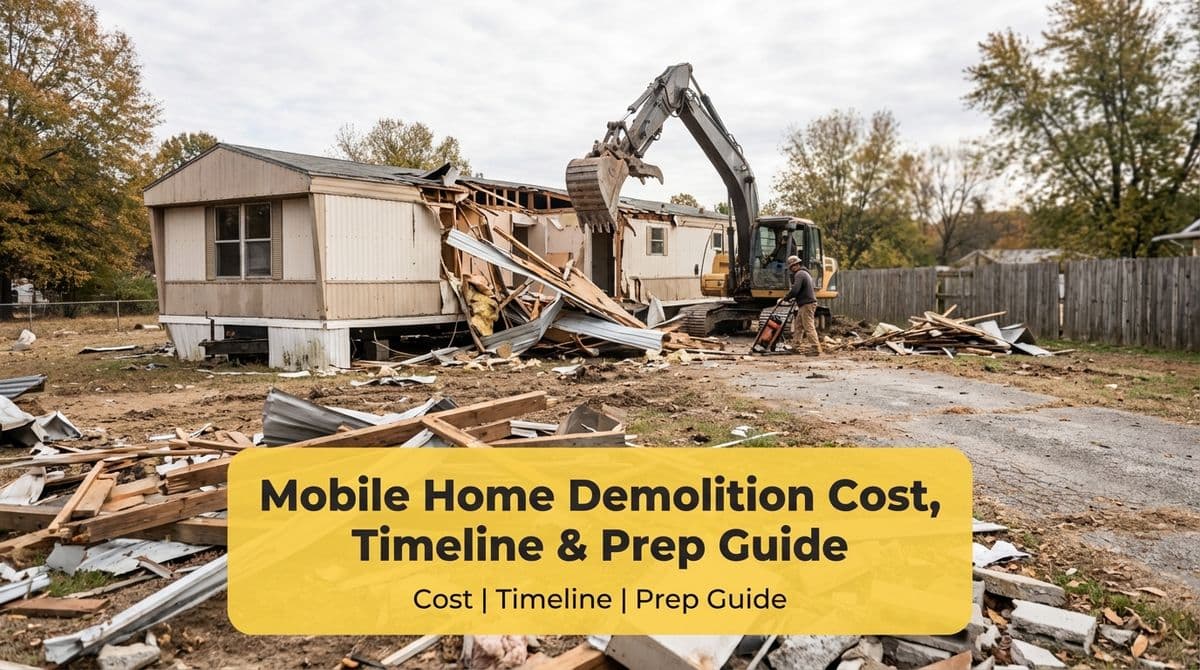
What Really Goes Into Mobile Home Demolition?
We recently got a call from a customer — let's call him Mark — who owns some property with an old single-wide mobile home on it. It was about 14' x 60' sitting on a metal frame, very similar to what a lot of folks around here have on their land.
Mark’s main question was simple: “How much will it cost to demo this and how long will it take?” But as we talked through his situation, we covered a lot more — things like access for equipment, utilities, dumpsters, and what happens to the steel frame underneath.
Since we get this kind of call all the time, we wanted to walk you through the same details we shared with Mark so you know what to expect with a mobile home demolition project.
Typical Cost Range for Mobile Home Demolition
When Mark asked about price, we gave him the same honest range we usually share for a 14' x 60' mobile home:
- Typical range: $5,000–$8,000 for a standard single-wide demo
- Includes: equipment, labor, dumpsters, hauling, and disposal
For Mark’s property, because it was wide open and easy to access, we told him we’d likely be closer to the $5,000 end of that range. But not every project is as straightforward, and that’s where the variables come in.
What Affects the Cost of Mobile Home Demolition?
When we price a job like this, there are a handful of major factors we look at. Mark actually mentioned several of them on the call without realizing how important they were.
1. Access to the Home and Room for Equipment
One of the first things we asked Mark was about access. He told us the mobile home was at ground level with a big open area for dumpsters and equipment, and not much around it.
This matters because:
- Easy access means we can drive the excavator and trucks right up to the home.
- Good staging space makes it easier and faster to load dumpsters.
- Fewer obstacles around the home reduces the risk of damage and extra hand work.
When a mobile home is tight between trees, buildings, or fences, we may need more labor, smaller equipment, or extra time — all of which can push the cost up.
2. What’s Inside the Mobile Home
On the call, we mentioned to Mark that the price can go up or down based on “what’s in it.” That’s not just a throwaway line — interior contents make a big difference.
Things that can increase cost include:
- Furniture, trash, or personal belongings left inside
- Appliances like fridges, stoves, or washers
- Hazardous materials that need special handling
A mostly empty mobile home is faster and cheaper to demolish. If it’s packed full, we have to factor in extra labor, additional dumpster space, and sometimes separate disposal fees.
3. Utilities: Electric, Water, and Sewer/Septic
We always ask about utilities, and we did the same with Mark. He confirmed the electric was shut off, but wasn’t sure about the plumbing.
Before any demolition, we need to verify:
- Electric: power must be fully disconnected at the meter or main.
- Water: turned off and lines located.
- Sewer or septic: lines located and protected or properly capped.
Mark asked if we would just need to cut and cap the plumbing — and yes, in many cases, that’s exactly what we do. If we have to perform additional site work to make the utilities safe, that can add some cost, but it’s essential for everyone’s safety.
How the Demolition Process Actually Works
Another thing Mark was really curious about was the timeline and what the actual workday would look like. We walked him through our typical process, which is similar for most mobile home demos.
1. Equipment and Crew on Site
Mark asked how many guys and what equipment we use. For a job like his, we typically bring:
- A compact excavator to tear down and load debris
- One main operator running the machine
- One or two crew members on the ground handling debris and metal
This setup is efficient and keeps labor costs under control while still moving quickly.
2. Demo Timeline: One to Two Days for Most Jobs
When Mark asked how long it usually takes, he was surprised by the answer. We told him that for a typical single-wide:
- Average timeline: about two days
- Often done in: just one full day, depending on conditions
He even said, “Really? Wow, that’s unbelievable.” But with the right equipment and good access, a mobile home comes down and gets cleaned up faster than most people expect.
3. Dumpsters, Hauling, and Disposal
Mark guessed he might need around four dumpsters for his project, which is often in the right ballpark for a structure that size. The key thing we explained to him was:
- We provide all dumpsters
- We load them with the excavator and crew
- We haul everything off and handle disposal
- All of this is included in the quoted price
Homeowners really appreciate knowing there are no surprise dumpster rentals or hauling fees on top of the estimate.
What Happens to the Metal Frame Under the Home?
Mark had one more great question that we hear all the time: “What do we do with the metal thing it sits on?” He was talking about the steel frame under the mobile home.
Our process is straightforward:
- We cut the steel frame into manageable sections
- We load the metal along with the rest of the debris
- We haul it off as part of the same project
You don’t have to arrange a separate scrap metal pickup or worry about that frame being left behind. It’s all part of a complete demolition and site cleanup.
How to Get a More Accurate Price for Your Property
By the end of the call, Mark wanted to know how to nail down a more specific price for his project. Our answer is the same for anyone considering mobile home demolition:
- Send clear photos of all sides of the mobile home
- Share the property address so we can look at access and surroundings
- Tell us about what’s inside (empty, furnished, full of debris, etc.)
- Confirm the status of utilities or let us know if you’re unsure
With those details, we can usually give a solid estimate remotely. If anything is unclear, we’ll ask a few follow-up questions or schedule a site visit when needed.
If you have an old mobile home you’re ready to remove, we’re happy to walk you through the same process we did with Mark so you know exactly what to expect in terms of cost, timeline, and preparation.