What Size Dumpster Do I Need for a Home Cleanout or Remodel?
We recently helped a homeowner pick the right dumpster size for a cleanout and remodel. Here’s how to choose your size and what you can safely toss.
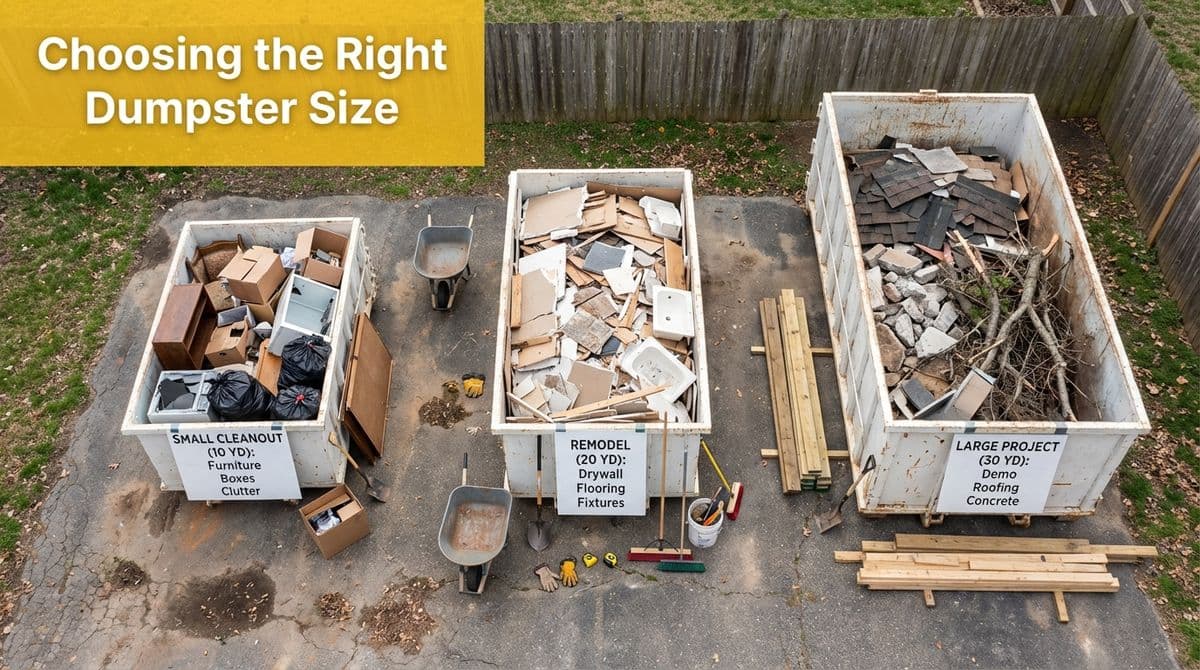
We recently helped a homeowner pick a dumpster size
We recently got a call from a customer — let’s call him Mike — who had just bought a place that needed a serious clean out and remodel. The house was mostly empty, but he had piles of old plywood, wallboard, and a block wall out back he wanted to knock down.
His two big questions sounded familiar:
- “What size dumpster do I need?”
- “Can I put block, wood, and drywall all in the same dumpster?”
We walked Mike through his options, and it’s the same advice we give any homeowner planning a cleanout or remodel. Let me break it down here so you can feel confident before you schedule your dumpster.
Start with your project: cleanout, remodel, or both?
Mike was basically doing a two-part project:
- Whole-house cleanout – removing leftover junk, scrap wood, and old wallboard.
- Light demo/remodel – tearing out a block wall and getting ready for new finishes.
The mix of debris matters. A house full of boxes and small junk fills by volume, while concrete and block hit the weight limit first. That’s why we asked Mike several questions:
- Is the house full of furniture, or mostly small debris?
- How much construction material (plywood, drywall, trim) are you removing?
- Are you tearing out any masonry like block, brick, or concrete?
His answer: no furniture, but a lot of old plywood and wallboard, plus a stretch of 8-foot-high block wall about 20 feet long. That told us we needed to think about both space and weight.
Dumpster sizes we typically recommend
For most home cleanouts and remodels, the two most common options are:
- 20-yard dumpster – good for most cleanouts and small remodels.
- 30-yard dumpster – better for larger projects or if you don’t want to risk running out of room.
When Mike called, we went over pricing in his county. In his area, the 20-yard included about six tons of weight, and the 30-yard included about seven tons. That extra ton can make a big difference when you’re tossing heavy materials.
As a rule of thumb for homeowners:
- 20-yard – up to a typical 2–3 bedroom cleanout, small kitchen/bath remodel, or flooring removal.
- 30-yard – whole-house cleanout plus remodel, multi-room tear-out, or projects with heavier debris.
Choosing between a 20-yard and 30-yard for a remodel
Mike told us his house was already empty of furniture, which makes some people think a 20-yard will be plenty. But once you start pulling down walls and tearing out old materials, the volume adds up quickly.
Here’s how we talk through it with customers:
- Leaning 20-yard if: you’re mainly tossing bagged junk, a few old cabinets, some trim, and limited drywall.
- Leaning 30-yard if: you’re doing multiple rooms, lots of plywood/wallboard, or you’d rather have extra space and avoid needing a second dumpster.
In Mike’s case, with a block wall plus remodel debris, we discussed using one dumpster for the masonry only (to keep heavy material separate and possibly cheaper) and another for mixed debris. That’s not always necessary, but for longer runs of block or concrete, it can actually save you money and avoid overweight fees.
What you can (and can’t) put in a home cleanout dumpster
One of Mike’s first questions was, “Can I put these blocks in the dumpster?” For his county, the answer was yes — and that’s usually true, but rules vary by landfill and local regulations.
Common items you can usually toss
- Household junk: boxes, clothing, toys, small appliances.
- Furniture: chairs, tables, mattresses (sometimes extra fees), dressers.
- Construction debris: plywood, drywall, trim, doors, cabinets, flooring.
- Yard waste (in many areas): branches, brush, small stumps.
- Masonry (where allowed): brick, block, concrete, stone.
Items that are often restricted or banned
Most landfills do not allow the following in standard roll-off dumpsters:
- Paint, stains, and solvents (especially if liquid).
- Motor oil, fuel, and other automotive fluids.
- Chemicals, pesticides, and hazardous materials.
- Large electronics, TVs, and some appliances with refrigerant.
- Tires and car batteries.
Because each county and landfill sets its own rules and fees, we always encourage customers to ask before tossing anything questionable. In Mike’s case, his county charged us more at the landfill, but they also allowed more tonnage in the price, which we explained on the call.
Why prices differ from what you see online
Mike had done his homework and said, “I saw a 20-yard listed online for around $375. I thought that’s what it would be.” He wasn’t wrong — that price was just for a different county with different landfill charges and only about two tons included.
We explained that in his county, the landfill had changed how they bill us, which meant our pricing needed to change too. His area cost more per load, but it also included a lot more weight, which matters if you’re tossing block and construction debris.
If you’re price-shopping, here are two things to check:
- How many tons are included? A cheaper base price with only 1–2 tons may cost more once overweight fees kick in.
- What county is the job in? Crossing a county line can change landfill rates, taxes, and rules.
How long you can keep the dumpster
Another thing Mike asked about was timing. He had a crew coming Friday morning and wanted the dumpster delivered Thursday afternoon and kept on-site for about 10 days.
That’s a pretty typical setup: we deliver the day before the tear-out starts, you get about a week to 10 days included, and then we pick it up when you’re done. If you need more time, we can usually extend the rental for a small daily fee, as long as you let us know.
Planning your own home cleanout or remodel?
If you’re staring down a home cleanout or remodel like Mike was, here’s a quick way to get started:
- Make a rough list of what you’re tossing: furniture, junk, drywall, block, etc.
- Decide if you’re doing just a cleanout, just a remodel, or both.
- Check what county you’re in so we can give accurate pricing and rules.
- Call us with your dates so we can schedule delivery the day before your crew starts.
From there, we’ll help you choose between a 20-yard and 30-yard, explain what you can put in your dumpster, and walk you through any local quirks with landfill rules or pricing. Our goal is simple: you focus on the project, and we’ll make sure the mess has somewhere to go.