Dumpster Rental 101 for Homeowners: Pricing & Neighbors
Confused about dumpster pricing and fill limits? Learn flat-rate vs. weight-based pricing, how full you can load a dumpster, and how to keep neighbors from using it.
Dumpster Rental 101: A Real Call That Inspired This Guide
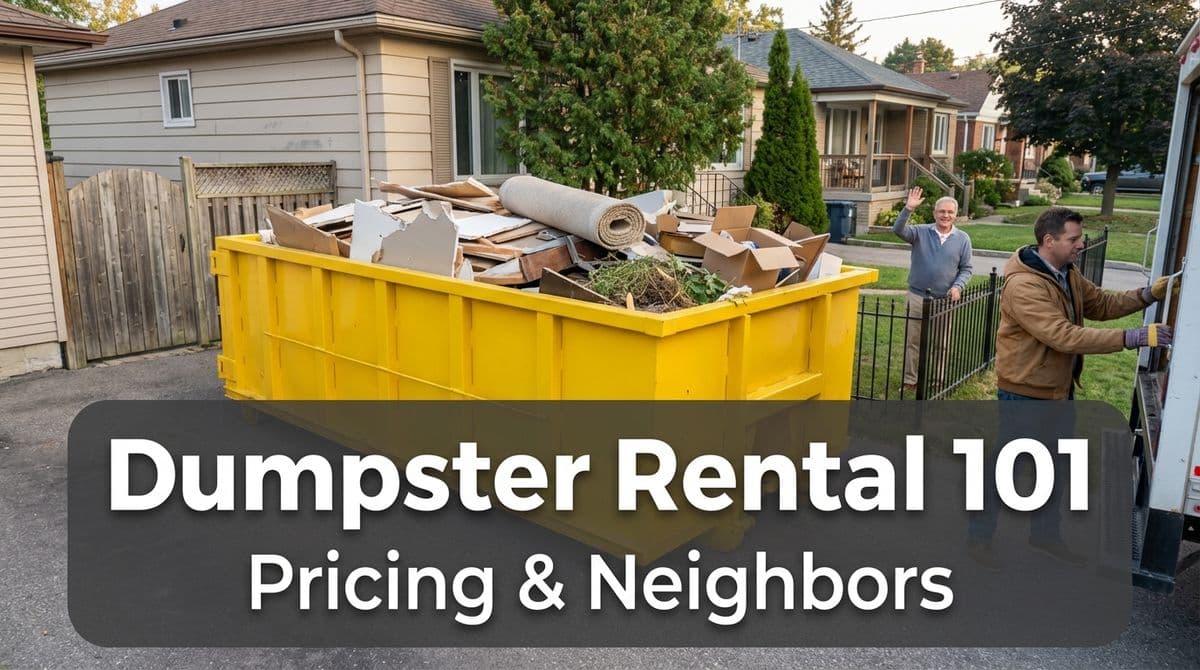
We recently got a call from a homeowner — let’s call him Jason — who was in a tough spot. His contractor had left the job, the 20-yard dumpster on-site was full, and neighbors had started tossing their own lumber and trash into it. On top of that, Jason had no idea how he was actually being charged or how full the dumpster was legally allowed to be.
We walked him through how pricing works in his county, what “full” legally means, and what he could do to keep neighbors from using his container on the next phase of the project. That conversation is exactly what we’re going to walk you through here.
Flat-Rate vs. Weight-Based Dumpster Pricing
One of Jason’s first questions was, “Is this charged by the weight?” That’s something we hear from homeowners all the time, and the answer is: it depends on your area and your hauler.
How flat-rate pricing works
In Jason’s case, the dumpster was in a county where the landfill charges by the yard, not by the ton. For that 20-yard dumpster, it was a flat rate of $525, no matter how heavy the load was (within legal safety limits).
With flat-rate pricing, you usually get:
- Predictable cost: One set price for the container and haul-away.
- Great for heavy debris: Concrete, roofing, tile, and other dense materials won’t trigger extra “overweight” fees.
- Simpler budgeting: You know up front what you’re paying.
How weight-based pricing works
In many other counties we serve, the landfill charges by the ton. The initial dumpster price might look cheaper, but there’s a weight allowance and then a per-ton fee if you go over.
With weight-based pricing, you’ll typically see:
- Lower starting price: But additional charges if the load is heavy.
- Best for light junk: Household clutter, small cleanouts, and lighter remodeling debris.
- Possible surprises: If you add tile, dirt, or roofing, the bill can jump.
Our advice to homeowners is simple: ask your dumpster company whether your area is flat-rate or weight-based before you book. Then tell them what you’re throwing away so they can match you with the right size and pricing structure.
How Full Can You Legally Fill a Dumpster?
Jason was worried because, thanks to the neighbors, the dumpster was “kind of like above the rim.” He asked if there was a tarp that would just smash it all down and make it okay.
Here’s what we explained to him, and what we tell all our customers.
The rule of thumb we use on every job
When we load and haul dumpsters, our limit is simple: if debris can fall off the container during transport, it’s too full. Safety and road laws require us to keep everything securely inside the box.
In practical terms, that means:
- Debris should be level with the top rail or only slightly above it.
- We can usually work with up to about 10 inches to a foot above the rim, but only if the material can be held down securely.
- Heavy, solid items (like lumber stacked flat) are easier to secure than light trash bags that want to blow away.
We do use tarps, but their job is to secure the load, not to crush an overloaded container into compliance. If bags or boards are sticking way up or hanging over the sides, we’re going to ask that they be removed or rearranged.
How to load your dumpster the right way
To avoid extra trips, delays, or being asked to pull items out at pickup time, we recommend homeowners:
- Load heavy items first, flat on the bottom, to create a stable base.
- Break down bulky items (cut lumber, flatten boxes, break apart furniture) so they stack tightly.
- Keep everything inside the walls — nothing sticking out over the sides.
- Stop when you’re level with the top, especially with loose trash or lightweight debris.
How to Keep Neighbors from Using Your Dumpster
One of Jason’s biggest frustrations was realizing that “the neighbors down the hill” were building a treehouse and quietly filling up “his” dumpster with their lumber. As he put it, he was glad he wasn’t paying extra for the weight — but he still lost valuable space he’d paid for.
We hear stories like this more than you’d think. While we can’t police who walks up your driveway, there are a few practical steps we suggest to homeowners.
Smart ways to discourage dumpster freeloaders
- Place the dumpster thoughtfully: If possible, position it closer to your house or garage rather than the street. The less visible and accessible it is, the fewer “mystery” deposits you’ll get.
- Use a tarp between workdays: Throw a tarp over the top and secure it with straps or bungees when work wraps up for the day. It’s not a lock, but it’s a clear signal that the container is in active use.
- Add a simple sign: A basic “Private Use Only — No Dumping” sign on the side of the container or nearby can deter casual dumpers.
- Talk to neighbors early: A friendly, “We’ve got a dumpster coming in — it’s just for our project, but if you ever want to split one sometime, let us know,” can set expectations without conflict.
What to do if neighbors already filled your dumpster
If you’re in Jason’s shoes and the container is already over-stuffed by others, here’s what we recommend:
- Rearrange loose items: If a few boards or bags are sticking up, try tossing them back inside and stacking more neatly to get under the rim.
- Call us before pickup: Let us know what happened. We can explain any potential issues ahead of time and help you avoid surprise charges or delays.
- Plan differently next time: For the next phase of your project, use the placement, tarp, and sign strategies from day one.
Before You Rent: A Quick Homeowner Checklist
Whether you’re finishing a remodel your contractor started or tackling a DIY cleanout, here’s how we suggest you prepare before the dumpster rolls in:
- Ask how pricing works in your area: flat-rate vs. weight-based, and what’s included.
- Describe your debris honestly so we can size the dumpster correctly and warn you about any restricted items.
- Plan the drop location for convenience, security, and easy pickup.
- Decide how you’ll protect your space from neighbor dumping: tarp, sign, and communication.
- Load smart: heavy items first, keep it level, and stay within the legal fill line.
If you’re getting ready for a project and have questions like Jason did — about pricing, loading limits, or just “how this all works” — we’re always happy to talk it through before you ever schedule a dumpster. A five-minute conversation can save you a lot of frustration later.