What a Dumpster Rental Really Costs (and How to Save)
Curious what a dumpster rental really costs? We break down size, weight, landfill fees, and simple ways to save so you can budget your cleanout with confidence.
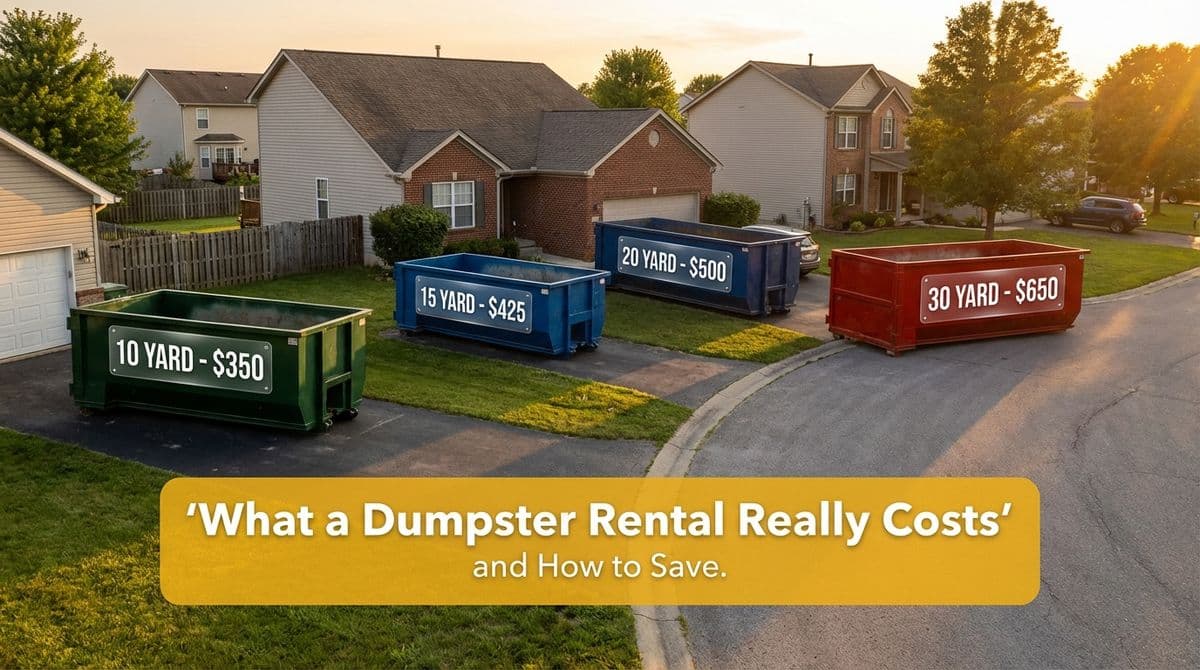
How Much Does a Dumpster Rental Really Cost?
We recently got a call from a homeowner — let’s call him Dave — who was moving out of his place in Sevier County. He needed a 30-yard dumpster for two weeks and wanted to know one simple thing:
“What’s this really going to cost me?”
Like a lot of folks, Dave had a mix of light household junk plus some landscaping rock, and he had heard prices could jump depending on where the load was dumped. He was right — and his questions are the same ones we hear every day.
Let’s walk you through how we broke it down for him so you can estimate your own dumpster rental costs without surprises.
The Three Big Factors That Drive Dumpster Pricing
1. Dumpster size
The first thing we asked Dave was what size he needed. He was leaning toward a 30-yard dumpster, which is a common choice for:
- Whole-home cleanouts before a move
- Large garage or attic cleanups
- Remodeling projects and bulky debris
In our area, the base price for a 30-yard in Sevier County runs higher than in some neighboring counties. That’s not the dumpster itself — it’s what the local landfill charges that pushes the price up.
2. Weight limits and tonnage fees
When Dave told us he had some landscaping rock going in with his lighter household items, that rock immediately caught our attention. Heavy materials like rock, concrete, dirt, and shingles can add a lot of weight, even if they don’t fill the dumpster volume.
Here’s how we structured it for him with contractor-style pricing:
- $350 base price for the 30-yard dumpster
- Plus dump fees by the ton, with no markup from us
- Typical 30-yard load: 3–4 tons in our service area
- Landfill rate in the cheaper locations: about $60 per ton
So if Dave ended up at around 3–4 tons, we estimated his total around $470–$590. If he loaded it heavier — closer to 5 tons or more — costs would climb, but we still had a plan to keep it reasonable.
3. Where the load is dumped
We serve multiple counties, and they don’t all charge the same dump fees. In Dave’s case, Sevier County’s landfill is more expensive than some nearby options, so we told him we would:
- Gauge the weight of his load when we picked it up
- Take it to the cheapest appropriate landfill based on weight
- Cap his cost at about $700 total for a very heavy 30-yard load
If his load came in lighter — say around 2 tons — his total would be closer to $470. That way he wasn’t overpaying for a “built-in” tonnage he might not use, which happens with some flat-rate pricing models.
Rental Periods and Scheduling: Don’t Get Hit With Extra Fees
Another question Dave had was, “How long do we get to keep it?” For him (and most of our customers), we include a 14-day rental in the base price. That gave him a full two weekends to load up while he was back in town with help.
To avoid extra fees, we always recommend:
- Confirming your dates before booking so you don’t need extensions
- Giving at least 24 business hours’ notice for delivery and pickup
- Asking about daily or weekly extension rates if you think you might need more time
Avoid Hidden Charges: Prohibited Items and Extra Fees
One thing that can surprise homeowners is extra charges for prohibited or special-handling items. Landfills and transfer stations have strict rules, and if certain items are mixed into a load, they can trigger extra fees or even rejection of the load.
Common items to keep out of a standard dumpster include:
- Wet paint, solvents, and chemicals
- Car batteries and automotive fluids
- Propane tanks and fuel containers
- Certain electronics (TVs, monitors) depending on local rules
Before loading, we always encourage customers to:
- Ask for a prohibited items list when booking
- Use a local household hazardous waste drop-off for paints and chemicals
- Set questionable items aside and check with us before tossing them in
A quick phone call up front can easily save you from surprise fees later.
Driveway Placement, Access, and Avoidable Costs
Another cost-related detail Dave did right was planning access. Failed deliveries or relocation can add fees if we show up and there’s nowhere safe to set the dumpster.
To keep things smooth (and avoid extra charges), we recommend:
- Clearing cars and obstacles from the drop area before delivery
- Choosing a flat, solid surface like concrete or compacted gravel
- Letting us know about steep driveways, tight turns, or low branches in advance
- Marking the preferred placement spot with cones, boards, or chalk
Good access helps us place the dumpster correctly the first time, keeps your property safer, and prevents any “trip with no delivery” or relocation fees.
How to Save Money on Your Dumpster Rental
We built Dave’s pricing so he could see both the worst-case and the best-case scenarios. Here are some of the same money-saving tips we shared with him:
- Right-size your dumpster. Too small and you need a second one; too big and you might pay for space you don’t use.
- Watch the heavy materials. Keep rock, concrete, and dirt to a minimum, or ask about special pricing for heavy loads.
- Use the full rental period. Plan your helpers and cleanout schedule around the included days so you don’t need extensions.
- Ask how tonnage is billed. We don’t upcharge dump fees — you pay what the landfill charges, nothing extra from us.
At the end of our call, Dave felt comfortable knowing that $700 was his max, but that it could easily come in lower if his load was lighter — and that we’d route it to the cheapest landfill that made sense for his situation.
If you’re staring at a move, cleanout, or remodel and wondering what a dumpster will really cost, reach out and we will walk through the size, weight, and local dump fees with you just like we did for him. A few minutes of planning up front can make the whole job smoother and a lot easier on your wallet.