Bought a “Furnished” Home Full of Junk? Here’s What to Do
Bought a “furnished” home that’s really junk? Here’s how we price, plan, and haul away inherited clutter so you can finally enjoy your new place.
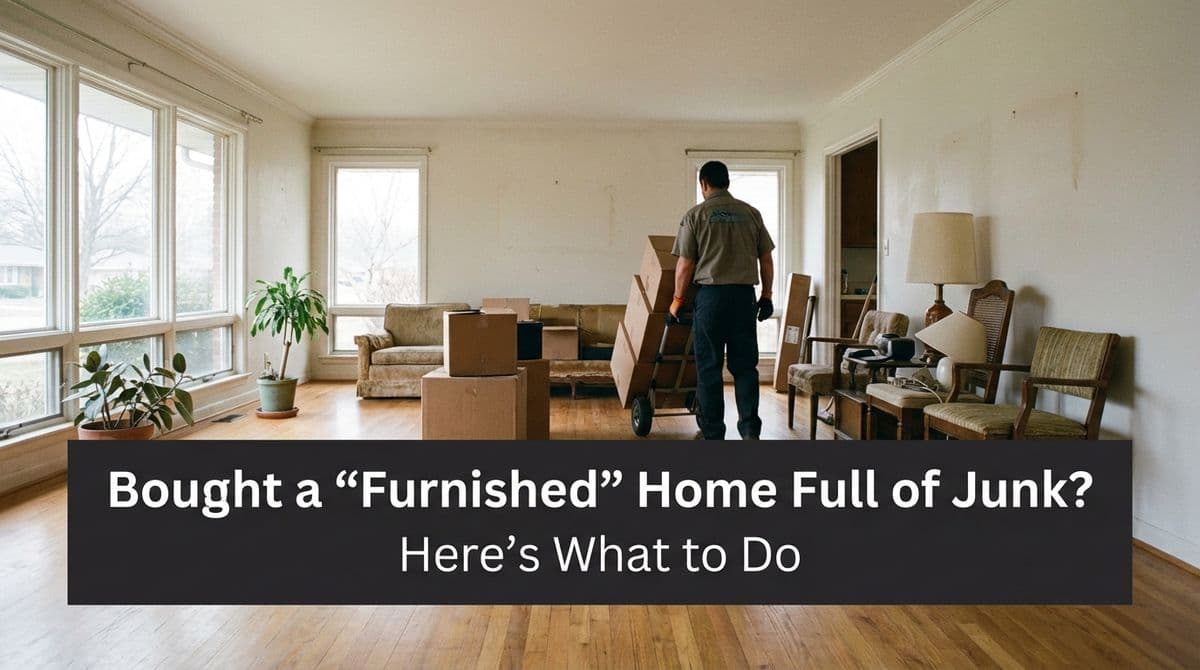
“Furnished” Really Meant “Full of Junk”
We recently got a call from a new homeowner — let’s call him Brian — who had just bought a “furnished” house in the mountains. On paper, it sounded great: furniture included, move-in ready. In reality? The place came loaded with random storage bins, worn-out furniture, and a big pile of old firewood rotting under the deck.
As Brian put it, “When someone sells a house and they say furnished, that means they leave you their junk they don’t want.” We hear that a lot. When you inherit someone else’s stuff — whether from a home purchase, an estate, or a vacation rental turnover — it can be overwhelming to figure out what to do and what it’s going to cost.
In this post, we’ll walk you through how we handle jobs like Brian’s: how pricing works, what your options are, access issues (like steep driveways), and what to expect on junk removal day.
Step One: Decide What’s Junk vs. What You’re Keeping
Whenever someone calls us about a “furnished” home, the first thing we suggest is a quick sort. Before we arrive, we encourage homeowners to walk through the house and property and separate items into three mental piles:
- Keep – usable furniture, décor you like, working appliances
- Donate – items in good condition that you don’t want but someone else could use
- Junk – broken, outdated, rotted, stained, or clearly unwanted items
In Brian’s case, most of the “furnished” items were mismatched and not his style, and the old firewood under the deck was attracting bugs. He decided almost all of it was junk. When you call us, we’ll ask questions similar to what we asked him: What types of items are there? Inside? Outside? Under decks or in sheds? That helps us estimate the right truck size and crew.
How We Price Junk Removal by Volume
We price the way we explained it to Brian: by volume — how much space your items take up in our truck or container. For example, in our market:
- About a 10-yard load might be a small trailer’s worth of furniture and bins.
- A 20-yard load (what we told Brian) might run around $800.
- A 30-yard load might run around $1,200.
But here’s the important part: we don’t charge you for empty space. Just like with Brian, if you don’t fill even half the container, we prorate. For a smaller load that only takes up a fraction of the space, your cost might look more like $300–$400, depending on exactly how much you have.
When you send us photos (which we always recommend), we can usually tell you whether you’re in that smaller-load range or if you’re creeping up toward a half or full truck.
Items That May Cost Extra (and Why)
Most typical household junk is included in standard volume pricing. In our experience, extra fees only come up with certain items because of disposal rules at local facilities. It’s good to know this before we arrive so there are no surprises. Common examples include:
- Mattresses and box springs – Many landfills charge an extra fee per piece.
- Refrigerators and freezers – Coolant needs to be properly removed and handled.
- Paint, chemicals, or hazardous materials – These often require special drop-off at separate facilities.
- Old TVs and electronics – Some areas have e-waste surcharges.
- Tires – Typically billed separately by the tire.
When you call us, we’ll ask if you have any of these. If you do, we explain exactly how they’re priced and whether we can take them or if they need a different hazardous waste service.
What If Your Driveway Is Steep or Hard to Access?
Brian’s place had another challenge: a steep hill that even a big-box delivery truck struggled to climb. That’s something we run into a lot with mountain and hillside properties. When access is tight, we adjust how we work — but we can almost always find a solution.
Here’s how we typically handle tough driveways and hills:
- Photo check first – We always ask for pictures, not just of the junk, but also of the driveway and parking options. That’s exactly what we had Brian send us.
- Use a smaller truck or trailer – If our largest truck can’t safely make it, we’ll use a smaller vehicle and do a couple of trips if needed.
- Stage items in an easier area – If you have a lower driveway or flatter spot (like Brian did), we may load there to keep things safe.
- Extra labor vs. equipment – Sometimes it’s cheaper and safer to send more manpower and smaller vehicles than to force a big container into a tight spot.
When you talk to us, we’ll walk through access just like we did with Brian so you know what to expect and aren’t worrying about whether our truck can make it up the hill.
Check Your Contract: Should the Seller Have Removed It?
One thing we always suggest — especially when you’ve just bought a “furnished” home — is to glance back at your purchase contract or seller agreement. Look for language about:
- What items were supposed to stay (furniture, appliances, décor)
- What items the seller should have removed before closing
- Any “broom-clean” or “free of debris” requirements
We’re not attorneys, but we’ve seen plenty of situations where buyers had the right to ask the seller or agent to address excessive junk left behind. Even if you decide it’s not worth the hassle and you’d rather just have us handle it, it’s good to know where you stand.
How We Typically Schedule and Complete a Job Like This
With Brian, timing was tight — he was heading out of town that weekend and really wanted us there on Thursday. That’s pretty common, so we’ve built our process to be as simple as possible:
- Call or text us – Tell us what you’re dealing with, how soon you need it gone, and any access issues.
- Send photos – We review your pictures to recommend truck size, estimate the volume, and give you a price range.
- Lock in a day and window – We schedule a time that works for you and confirm whether you’ll be on-site or not.
- Day-of confirmation – Our crew gives you a heads-up when we’re on the way and walks the property with you (or via video if you’re remote).
- Final price & removal – We confirm the final volume-based price, then load everything, sweep up, and haul it away.
For inherited or newly purchased homes, we’re used to working with out-of-town owners, lockboxes, and property managers. We’ll coordinate whatever access you’re comfortable with.
Quick Checklist: Getting Ready the Day Before
To make junk removal smooth and keep your costs down, here’s what we recommend doing the day before we arrive:
- Walk the property – Confirm what’s definitely going and what’s staying.
- Group items where possible – If it’s safe, stage junk in a few central spots (garage, under-deck area, lower driveway).
- Separate anything hazardous – Put paint, chemicals, or questionable items in one area and let us know about them upfront.
- Clear access paths – Move vehicles, unlock gates, and make sure we can get to the junk safely.
- Keep small valuables out of the pile – If you’re on the fence about something, set it aside so it doesn’t go by mistake.
We take care of the heavy lifting, but a little prep on your end can save time and keep your invoice firmly in that smaller-load price range.
Inheriting Someone Else’s Stuff Doesn’t Have to Be a Headache
We know how frustrating it is to move into a “furnished” home that’s really just full of someone else’s leftovers. Our job is to make that frustration short-lived. From volume-based, prorated pricing to helping you work around steep hills and tight driveways, we handle situations like Brian’s all the time.
If you’ve just bought or inherited a property and you’re staring at a house full of junk, reach out. We’ll talk through what you’ve got, look at some photos, and help you turn that “furnished” surprise into a clean, usable space you can finally make your own.